The Story
Country of Origin - Southeast Asia
Average Weight - 1000 Grams per fruit
Introduction
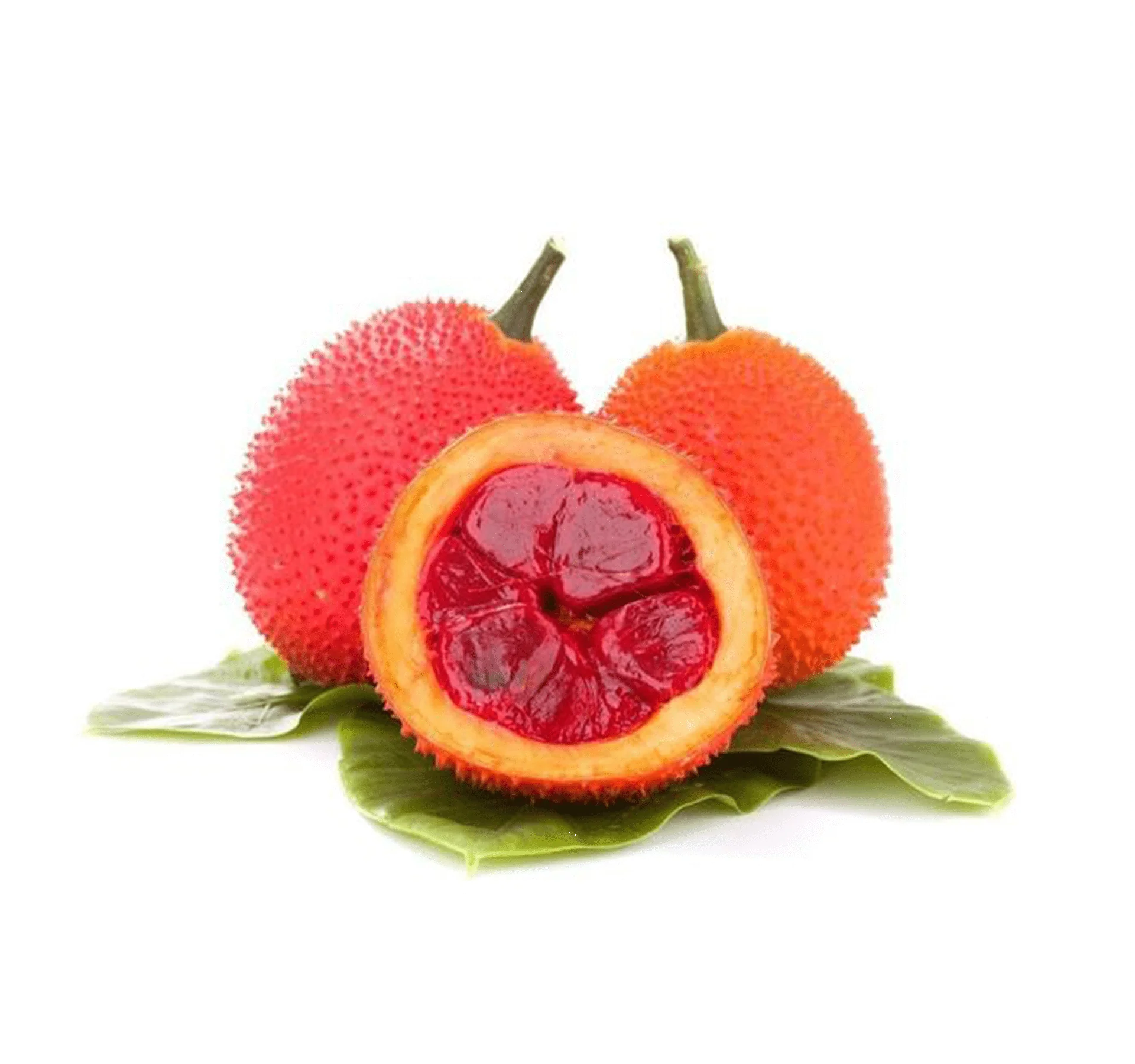
Gac (Momordica cochinchinensis) is a type of melon which is native in Southeast Asian countries and Northeast Australia. The fruits initially are green in colour, but later ripen to a dark orange colour and have a rounded oblong shape. It’s only harvested for two months each year (December and January) and is often used on special occasions in Vietnam as well as in traditional Chinese medicines.
History
Gac is believed to be native to Vietnam and may be found growing all throughout the warmer climates of Southeast Asia and Northern Australia. It can be grown also in sub-tropical areas but cool temperatures can inhibit its growth.
Regions
It is mainly cultured in China, Indochina and Thailand but thanks to its excellent nutrition facts nowadays it is cultured throughout the world with suitable environment.
Flavours & Texture
Gac fruit has not sweet taste and has a very mild taste and mushy texture. Its taste is not intense and it has been described to be like avocado and its flesh is pretty juicy.
Preparation
You can slice is in half and eat raw or use it in a fruit salad. As the fruit is very juicy you can make juice, smoothies or you can cook it with sticky rice in a dish called Xoi Gac, in which the fruit’s deep red colour and mildly fruity flavour is extracted.
Nutritional Value
Gac fruit has an excellent nutritional value as it is rich in antioxidants such as beta-carotene, lycopene, and zeaxanthin and vitamins. It contains the highest concentration of beta carotene of any known fruit or vegetable.
|
Calories per 100 g of the pulp |
120 kcal |
|
Fat |
8 g |
|
Carbohydrate |
10 g |
|
Fiber |
1.6 g |
|
Protein |
2 g |
Description
Country of Origin - Southeast Asia
Average Weight - 1000 Grams per fruit
Introduction
Gac (Momordica cochinchinensis) is a type of melon which is native in Southeast Asian countries and Northeast Australia. The fruits initially are green in colour, but later ripen to a dark orange colour and have a rounded oblong shape. It’s only harvested for two months each year (December and January) and is often used on special occasions in Vietnam as well as in traditional Chinese medicines.
History
Gac is believed to be native to Vietnam and may be found growing all throughout the warmer climates of Southeast Asia and Northern Australia. It can be grown also in sub-tropical areas but cool temperatures can inhibit its growth.
Regions
It is mainly cultured in China, Indochina and Thailand but thanks to its excellent nutrition facts nowadays it is cultured throughout the world with suitable environment.
Flavours & Texture
Gac fruit has not sweet taste and has a very mild taste and mushy texture. Its taste is not intense and it has been described to be like avocado and its flesh is pretty juicy.
Preparation
You can slice is in half and eat raw or use it in a fruit salad. As the fruit is very juicy you can make juice, smoothies or you can cook it with sticky rice in a dish called Xoi Gac, in which the fruit’s deep red colour and mildly fruity flavour is extracted.
Nutritional Value
Gac fruit has an excellent nutritional value as it is rich in antioxidants such as beta-carotene, lycopene, and zeaxanthin and vitamins. It contains the highest concentration of beta carotene of any known fruit or vegetable.
|
Calories per 100 g of the pulp |
120 kcal |
|
Fat |
8 g |
|
Carbohydrate |
10 g |
|
Fiber |
1.6 g |
|
Protein |
2 g |